
Miscarriage Tissue Testing, Chromosome Analysis and Specialist Support at MUMS Solihull | Private Testing After Your First or Subsequent Miscarriage | Results Usually Within 4–6 Weeks
£650
Average rating: 4.88 / 5 Read all reviews
| Private Genetic Testing of Products of Conception / Miscarriage Tissue |
£650 |
Results: Usually 4–6 weeks from laboratory receipt of a suitable sample.
Follow-Up: Complimentary consultation to explain your laboratory findings.
Unsuccessful Testing: £580 refund where testing fails to produce a result, in accordance with the service terms.
Experiencing a miscarriage can be physically and emotionally distressing.
For many women and couples, one of the most difficult questions following pregnancy loss is:
"Why did my miscarriage happen?"
Although it is not always possible to identify a cause, genetic testing of pregnancy tissue can sometimes provide valuable information.
At Midlands Ultrasound & Medical Services (MUMS), we offer private genetic testing of products of conception following miscarriage, including after a first pregnancy loss.
This specialist investigation examines pregnancy tissue to identify certain chromosome abnormalities that may have contributed to the miscarriage.
Testing is available whether your miscarriage occurred:
Our experienced team will explain the process, help arrange laboratory testing, and provide specialist support when your results become available.
You do not need to have experienced three miscarriages to request private products of conception testing at MUMS.
Products of conception (POC) testing is a laboratory investigation that examines pregnancy tissue following miscarriage.
It is also known as:
During pregnancy, an embryo normally develops with 46 chromosomes, arranged in 23 pairs.
Chromosomes contain genetic information that guides development.
Sometimes an embryo has an extra chromosome, a missing chromosome, or another chromosome abnormality.
These changes can prevent the pregnancy from developing normally and are a common cause of early miscarriage.
Most chromosome abnormalities associated with early miscarriage occur by chance and are not caused by anything either parent has done.
Products of conception genetic testing may help identify whether a chromosome abnormality contributed to your pregnancy loss.
However, it cannot identify every possible cause of miscarriage, and some results may be inconclusive.
Women and couples choose miscarriage tissue testing for different reasons.
Some wish to understand whether a chromosome abnormality contributed to their loss.
Others have experienced recurrent miscarriage and would like further information to guide investigations or planning for a future pregnancy.
Genetic testing may help to:
Identify a Possible Chromosomal Cause
Testing can sometimes identify missing or extra chromosomes or other chromosome abnormalities associated with pregnancy loss.
Provide Information Following a First Miscarriage
Private testing is available at MUMS even if this is your first miscarriage.
Guide Further Investigations
Certain results may indicate whether parental chromosome testing, genetic counselling or additional assessment should be considered.
Support Planning for a Future Pregnancy
Your specialist can explain whether the findings have implications for future pregnancy care.
Provide Answers Where Possible
Although testing cannot always explain why a miscarriage occurred, some women find it helpful to understand the available laboratory findings.
We aim to make the process as straightforward and supportive as possible.
Please telephone our team on 0121 704 2669 as soon as possible if you wish to arrange testing.
We will explain the service, discuss the practical arrangements, and advise you about bringing your sample to the clinic.
Pregnancy tissue should be placed in a suitable sterile, leakproof container.
The sample should be kept refrigerated until it can be delivered to MUMS.
Do not freeze the sample or add preservatives, formalin or other liquids unless specifically instructed by the laboratory.
Please contact our team promptly for advice about sample handling and delivery.
If your miscarriage occurs in hospital, you may wish to ask the treating team whether pregnancy tissue can be retained for genetic testing.
Collection and release of tissue will depend on the hospital's procedures and the clinical circumstances.
We strongly recommend delivering your sample directly to MUMS.
Our team will arrange the appropriate documentation, packaging and labelling before forwarding it to our specialist laboratory in London.
Please contact us before attending so we can confirm the sample arrangements and laboratory requirements.
The laboratory examines the tissue to determine whether suitable pregnancy tissue is available for genetic testing.
Where appropriate, chromosome analysis is performed.
If standard chromosome testing is unsuccessful, an additional molecular method may be considered in accordance with the laboratory's testing pathway.
Results are usually available within approximately 4–6 weeks.
Some samples may require additional laboratory work, which can affect the turnaround time.
Once your results are available, MUMS will arrange for them to be shared with you.
You will be offered a free-of-charge follow-up consultation with an appropriate miscarriage specialist to explain the findings and discuss any recommended next steps.
Depending on the laboratory method used and the quality of the sample, chromosome testing may identify:
Missing Chromosomes
Where one or more chromosomes are absent.
Extra Chromosomes
Where an additional chromosome is present, sometimes referred to as trisomy.
Large Chromosome Deletions or Duplications
Where significant sections of genetic material are missing or duplicated.
Certain Chromosome Rearrangements
Some structural chromosome changes may be identified, depending on the testing method.
The laboratory findings may help explain whether a chromosome abnormality contributed to the miscarriage.
However, no genetic test can identify every possible genetic or non-genetic cause of pregnancy loss.
Karyotyping is a laboratory technique used to examine the number and structure of chromosomes.
The laboratory attempts to grow suitable cells from the pregnancy tissue in culture.
These cells are then examined by trained cytogenetic scientists.
Karyotyping may identify:
Cell culture can take approximately 7–21 days.
Occasionally, the cells do not grow successfully or the sample does not contain suitable pregnancy tissue.
In these circumstances, an alternative molecular testing method may be considered.
Sometimes the laboratory is unable to obtain a result using conventional karyotyping.
This may happen because the cells are no longer viable, do not grow in culture or the sample is unsuitable.
Where appropriate, the laboratory may use a molecular technique that examines DNA without requiring cells to grow.
Depending on the method used, molecular testing may identify missing or extra chromosomes and certain other changes in chromosome copy number.
However, molecular techniques have their own limitations and do not necessarily identify all chromosome rearrangements.
Additional testing may take approximately one to two weeks.
Your results consultation will include an explanation of the method used and what the findings mean.
This is an important limitation of products of conception testing.
Following an early miscarriage, a sample may contain a mixture of pregnancy tissue and maternal tissue, such as tissue from the lining of the uterus.
Sometimes there is insufficient fetal or placental tissue for meaningful genetic analysis.
This is known as maternal tissue contamination or, where only maternal material is present, maternal tissue sampling.
If the laboratory tests maternal tissue rather than pregnancy tissue, the genetic result may reflect the mother's chromosomes rather than those of the pregnancy.
This means the test may not provide an explanation for the miscarriage.
Our specialist laboratory examines the sample and determines whether appropriate genetic testing can proceed.
Where suitable pregnancy tissue cannot be identified, the laboratory may issue a report explaining the limitation.
In some circumstances, further molecular analysis may be considered.
A result showing normal chromosomes does not always prove that the pregnancy itself had normal chromosomes, particularly where maternal tissue contamination cannot be excluded.
Our team will explain these limitations and the implications of your individual result.
Although the laboratory uses established chromosome analysis methods, not every sample produces a result.
The laboratory's stated success rate for the combined testing approach is approximately 95%, although the likelihood of success depends on the sample and testing circumstances.
Occasionally, testing may fail because:
If testing fails to return any result, MUMS offers a refund of £580.
The precise circumstances in which this refund applies will be explained before testing.
We believe it is important that patients understand the possibility of an inconclusive or unsuccessful result before deciding whether to proceed.
We understand that decisions about pregnancy tissue can be deeply personal.
Before testing, MUMS will discuss the laboratory's arrangements for tissue retention, disposal, or return.
You will be asked to provide consent regarding what happens to the tissue following laboratory analysis.
Subject to the laboratory's requirements and the availability of remaining tissue, options may include:
Our team will explain the available arrangements and give you the opportunity to ask questions before providing consent.
Your laboratory report may identify a chromosome abnormality, show no abnormality detected within the limits of the test, or explain why a reliable result could not be obtained.
If a Chromosome Abnormality Is Identified
This may provide an explanation for the pregnancy loss.
Many chromosome abnormalities arise by chance and are not inherited.
Certain findings may prompt consideration of parental chromosome testing or genetic counselling.
If No Chromosome Abnormality Is Identified
This does not necessarily exclude a genetic or other cause of miscarriage.
Your specialist can explain whether further investigations are appropriate, particularly if you have experienced recurrent pregnancy loss.
If the Result Is Inconclusive
Your specialist will explain the limitations of the sample and laboratory testing and discuss whether any further investigations are appropriate.
At MUMS, we believe patients should have the opportunity to understand their results rather than simply receive a laboratory report.
Following your products of conception testing, you will be offered a complimentary consultation with an appropriate specialist.
This may be with:
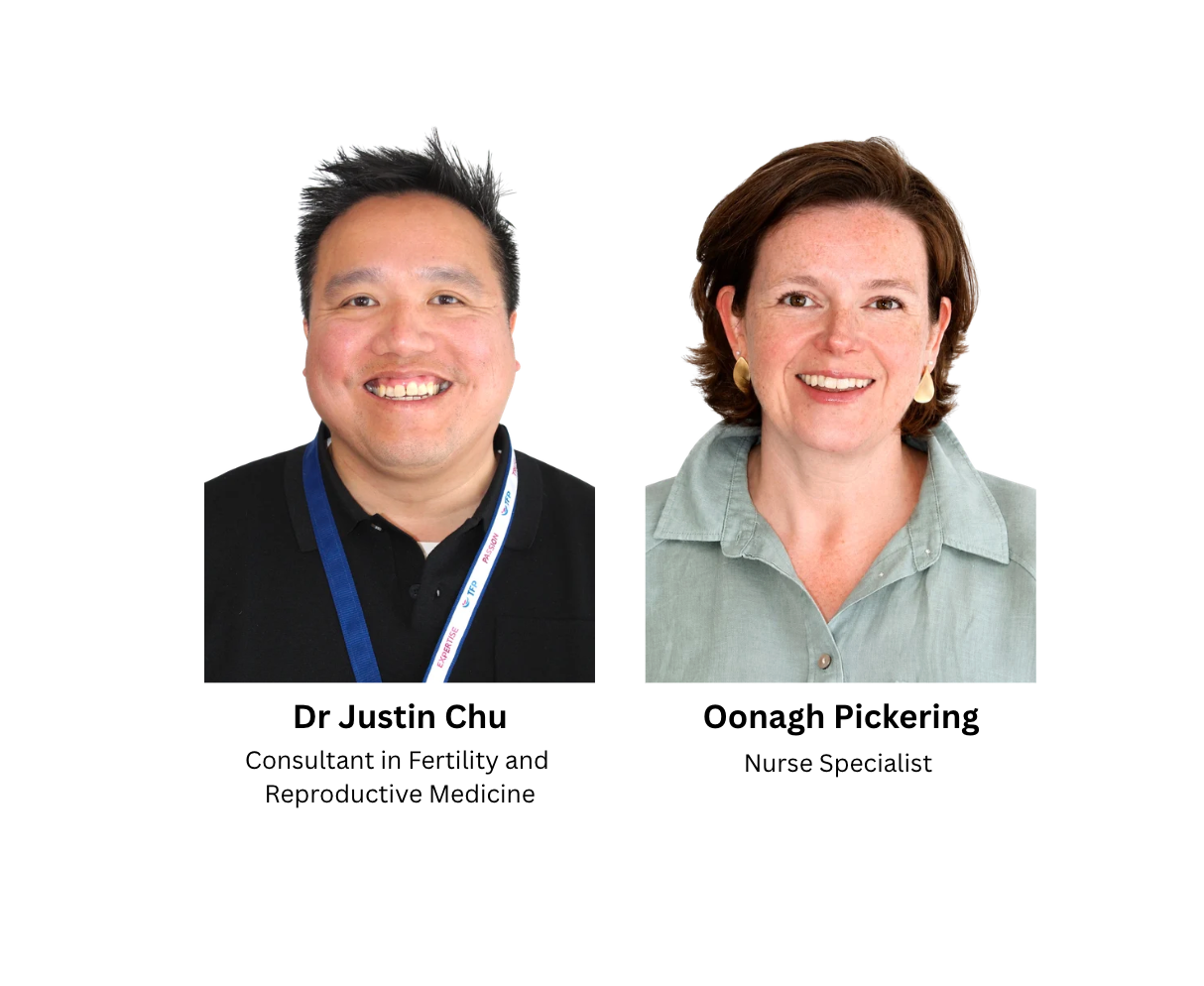
Mr Justin Chu – Reproductive Medicine and Fertility Specialist
or
Oonagh Pickering – Specialist Miscarriage Nurse
Your consultation provides the opportunity to discuss:
Our aim is to provide clear information, compassionate support, and appropriate guidance for your next steps.
Samples that have previously been frozen cannot be tested using standard culture and karyotyping methods, as these require viable cells.
For frozen samples, molecular genetic testing is required as an alternative method of analysis.
Cost of molecular testing: £995
This testing option should be discussed with our team before submitting a sample to confirm suitability.
In addition to chromosomal analysis, MUMS Clinic can offer paternity testing using products of conception to help establish biological paternity.
This testing requires a blood sample from both the mother and the suspected father, which will be analysed alongside the products of conception sample.
Cost of paternity testing: £995
Please contact our team before submitting samples to discuss the testing requirements and arrangements.
If you have experienced recurrent miscarriage or wish to discuss further investigations, MUMS also offers specialist miscarriage assessment.
This may include consultations, pelvic ultrasound, selected blood tests, and other investigations where clinically appropriate.
Learn More About Private Miscarriage and Recurrent Miscarriage Investigations
For women planning another pregnancy, our consultant gynaecologists can also provide early pregnancy advice and ultrasound monitoring.
Learn More About Consultant-Led Early Pregnancy Care
Specialist Genetic Testing | Compassionate Miscarriage Care | Results Usually Within 4–6 Weeks
If you have recently experienced a miscarriage and would like to arrange genetic testing of pregnancy tissue, our team is here to help.
Private Products of Conception Genetic Testing – £650
Complimentary Results Consultation Included
Call 0121 704 2669
Please contact us as soon as possible to discuss sample collection, storage, and delivery.
Midlands Ultrasound & Medical Services (MUMS)
1 Park Avenue, Solihull, West Midlands, B91 3EJ
Providing trusted private pregnancy and gynaecology care for over 25 years.
For further technical information, please see our laboratory's Products of Conception Testing Information Leaflet.
Yes. MUMS offers private genetic testing of pregnancy tissue following a first miscarriage or subsequent pregnancy losses.
You do not need to have experienced three miscarriages to request this service.
Results are usually available within approximately 4–6 weeks, although some samples may require additional testing.
Yes, subject to the laboratory's sample requirements.
Please contact MUMS promptly for advice about collection, storage, and delivery.
Potentially, yes.
You should contact the hospital team promptly to discuss whether pregnancy tissue is available and can be released for private genetic testing.
The sample should be placed in a suitable sterile, leakproof container and refrigerated.
Please contact MUMS for specific instructions before collection or delivery.
If testing fails to return any result, the stated MUMS refund is £580, subject to the service terms.
Our team will explain the circumstances in which this applies.
Sometimes.
Testing may identify chromosome abnormalities associated with pregnancy loss, but it cannot identify every possible cause of miscarriage.
Your specialist will explain the result and whether any further investigations may be appropriate.
A normal result does not exclude every possible cause of miscarriage.
Yes. A complimentary follow-up consultation is included so that your findings can be explained and appropriate next steps discussed.
No. You can contact MUMS directly to enquire about private products of conception testing.
Copyright © 2026 Midlands Ultrasound and Medical Services | Company number: 04844920